CANING & RUSHING RESTORATION
While a properly crafted rush seat can last up to 60 years, over a period of many years, the cane or rush can become stretched, stained or damaged. The highly skilled experts at Rahn’s Furniture Refinishing can restore your chairs to perfect condition while maintaining the integrity to the look and feel of your furniture.
Caning
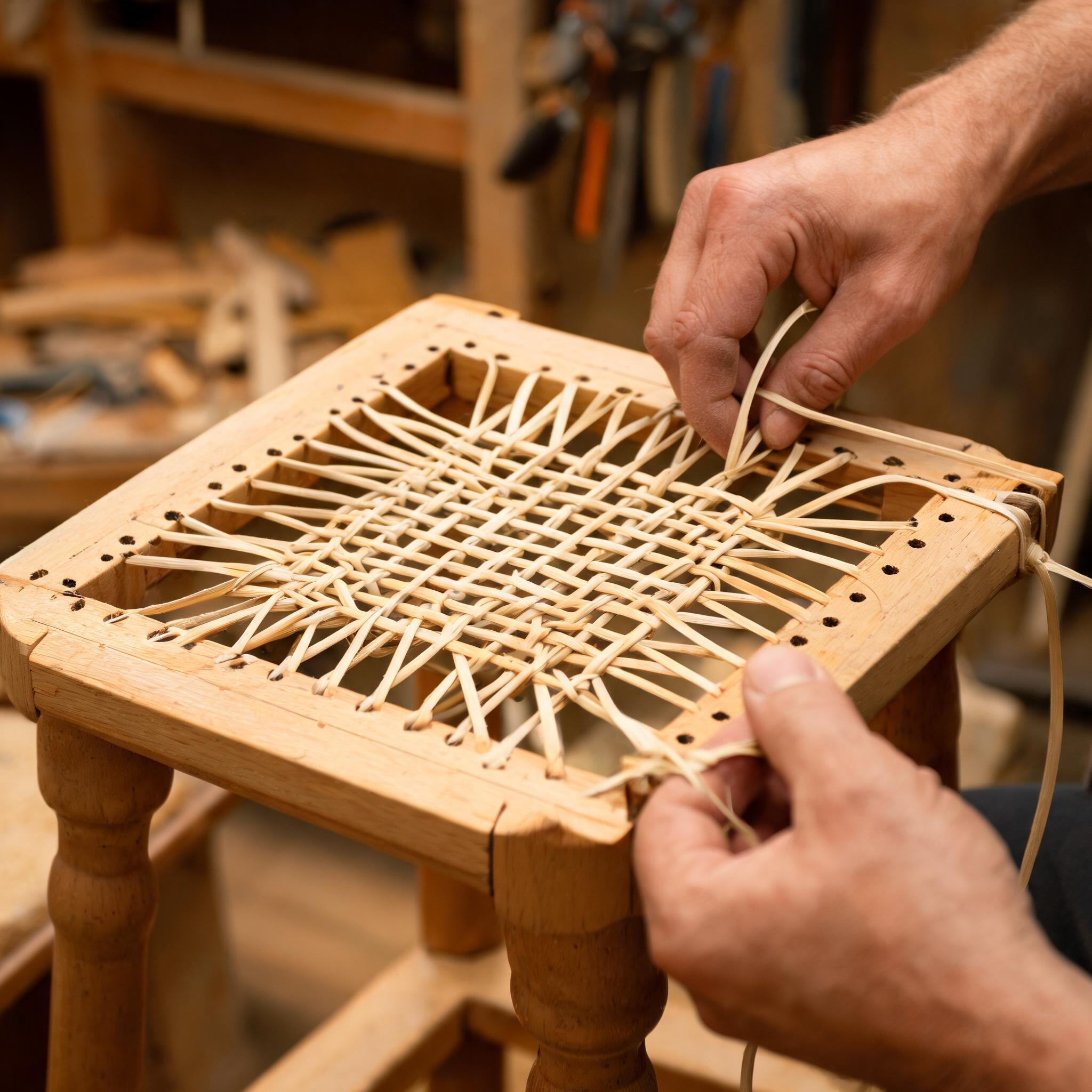
Caning is not a particularly accurate term. Canes themselves are not used to provide the material used, rather the bark of the rattan tree. The rattan tree is native to parts of Africa, Asia, and parts of Australasia. Cane seating is highly favored, as it allows ventilation when sitting, and the rattan bark is insect resistant.
Caning has been used for thousands of years: a bed in Tutankhamun’s tomb had a cane base. Caned furniture was introduced to Europe in the early 17th Century, where it immediately became fashionable. By the 18th century, European manufacturers were importing the cane and using it on their own, locally made furniture. The patterns in cane furniture are created by individual canes being threaded through holes in the frame.
With the highest quality furniture, different techniques were employed to hide the cane from showing through on the back of the chair. The first method involved a rebate on the back of the chair. All the cane that would normally be seen from the rear was worked within this rebate. The rebate then was filled with a glued in wooden strip to match the wood of the frame. Replacing the cane in these types of chairs can be time consuming and expensive. This extra work is mainly due to the care needed to remove the rebate filler piece. It is possible that removing this filler piece could cause damage to the frame, which would then need to be repaired and finished to match the existing wood.
The second style of hiding the cane from the rear involved drilling angled holes that meet without going completely through the frame. The cane is then threaded through one hole and out of the next. Replacing the cane in such a design is almost a lost art.
By the early 20th century, machine-made cane sheets became available. These sheets were then cut to size, pressed and glued into a rebate around the frame. A wooden wedge was then driven in to secure the cane mat in place. Much of the restoration work performed on cane in the past has substituted hand woven cane with machine-made matting. When refurbishing a chair, it is possible to reintroduce hand woven cane.
When a chair or lounger has two cane-woven sections, sometimes replacing just one can cause a problem with mismatched colors. At Rahn’s Furniture Refinishing, the original color can be matched by making a mix that exactly matches the original, including all the effects that aging and sunlight has had on the original panel. The result is that the new section can be finished to make it indistinguishable from the original section.
Rushing
The oldest known example of a rush-woven chair dates back to a discovery in an Egyptian tomb dated to about 4,000 BC. The rushing that we use today developed from the use of loose rushes as a floor covering in medieval times. These loose rushes evolved into woven mats and then into woven seats on a frame chair.
The rushes used for the weaving varied depending on what was available locally. Almost all American chairs used the cattail rush. Making the ‘rope’ for weaving was very skilled work; it required a keen ability to feel the texture of the rushes that were being woven as much as eyesight. Rushes are used less often today due to the lack of skilled craftsmen able to produce the fine quality of ‘rope’, as well as the costs involved. Usually the ‘rope’ is now made of pre-bound rushes or a heavy-duty paper, wound to reproduce the rush effect.
Although all the weaves have a common quartered look, there are variations. In the US, there are usually four evenly-sized triangular panels. A French woven chair seat typically has wider side triangles than those at the front and back. The herringbone seat design was developed by the Dutch in Indonesia; this is commonly called the ‘Malacca weave.’ Chairs with rush woven seats were originally considered somewhat rustic. But in the late 1700s, furniture makers began to incorporate rushing in more elegant furniture. For example, Thomas Chippendale used decorative rush weaving in some of his designs. Today rushing is used in more modern furniture designs, with the traditional rush weave on the seat and chair back combined with stylish frames.
It is possible to repair damaged rush-woven chairs, although it is usually more aesthetically pleasing and cost-effective to completely replace all the weave. For assistance and advice regarding the best solution to restore your chair, contact Rahn’s Furniture Refinishing.
Entrust Your Treasured Furniture to Rahn’s Furniture Refinishing
At Rahn’s Furniture Refinishing, we appreciate that your caned and rushed chairs can have both a financial and sentimental value. With 50 years’ experience in delivering a first class service and the highest quality craftsmanship to our many appreciative clients, you can be confident that your chairs will be restored and refinished to the best possible condition. From the moment we pick up your chairs, through the restoration process, until they are delivered back to you, you can be assured that we will take the best possible care of your furniture.
Contact us today to discuss how Rahn’s Furniture Refinishing can help you bring your rush and cane furniture back to its original condition.